What is Inventory? Raw Materials, WIP & Finished Goods Explained with Examples
Understand what inventory really means in business and accounting. Discover how raw materials, WIP, and finished goods are recorded on balance sheets and handled under Indian GST.
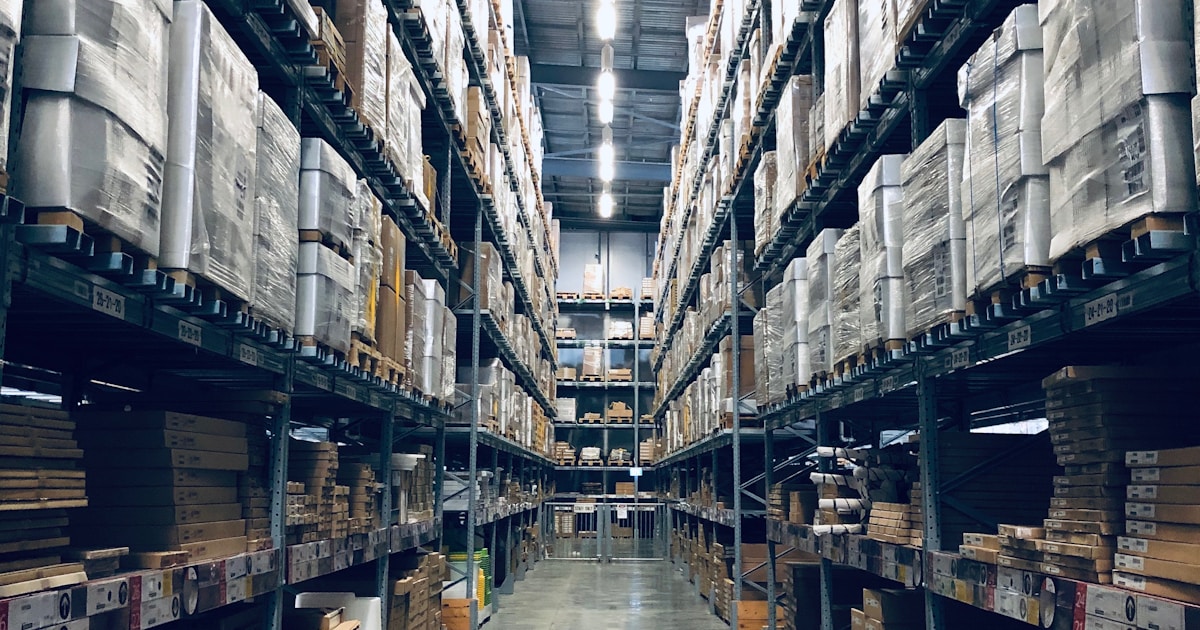
Complete guide to what inventory is in accounting and business. Explore raw materials, work in progress, finished goods, valuation rules, and GST ITC implications.
Every commercial transaction in commerce begins and ends with inventory. From small neighborhood grocery shops to large manufacturing plants, inventory constitutes the single largest operational investment on a company's balance sheet.
Yet, many business owners confuse inventory with general assets, or fail to understand how different types of inventory impact profit margins, working capital, and GST compliance.
In this guide, we break down what inventory actually is, its balance sheet classification under Indian Accounting Standards (AS-2 / Ind AS 2), the core stages of inventory, and how to track stock movements accurately.
⚡ Quick Answer (AEO / BLUF): In accounting, inventory represents current assets intended for sale in the ordinary course of business or used in production. For example, in a garment store, unsold shirts are finished goods inventory; in a bakery, flour and sugar are raw materials. Under Indian Accounting Standard AS 2, inventory is valued at Lower of Cost or Net Realizable Value (NRV).
Definition: What is Inventory in Accounting?
In accounting and finance, inventory (also known as stock-in-trade) refers to the tangible assets owned by a business that are held for sale in the ordinary course of business, in the process of production for such sale, or in the form of materials or supplies to be consumed in the production process.
The Three Statutory Criteria of Inventory:
Under Accounting Standard 2 (Valuation of Inventories), an item is classified as inventory if it satisfies any of these conditions:
- Held for sale in the ordinary course of business (e.g., packaged goods in a retail shop).
- In the process of production for such sale (e.g., partially assembled goods).
- In the form of materials or supplies to be consumed in the production process or in the rendering of services.
Important Accounting Principle:
Inventory is classified as a Current Asset on the Balance Sheet because it is expected to be converted into cash (through sales) within the normal operating cycle or within 12 months.
The 4 Primary Stages of Inventory (With Real-World Examples)
To manage inventory effectively, you must categorize items based on where they stand in the supply chain lifecycle:
[Raw Materials] ──► [Work-in-Progress (WIP)] ──► [Finished Goods] ──► [Retail Sale / Cash]
       ▲                                                                       │
       └─────────────────── [MRO & Packaging Supplies] ────────────────────────┘
1. Raw Materials
These are unprocessed basic commodities or purchased components that a business transforms into finished products.
- Bakery Example: Flour, sugar, yeast, butter, chocolate chips.
- Electronics Example: Bare circuit boards, microcontrollers, copper wiring, solder.
- Garment Example: Unstitched raw cotton rolls, zippers, plastic buttons.
2. Work-in-Progress (WIP)
WIP refers to materials that have entered the production line and have incurred direct labor and manufacturing overhead costs, but are not yet finished.
- Garment Example: Fabric pieces cut to pattern dimensions, awaiting collar attachment.
- Furniture Example: Wooden planks cut and assembled into a dining chair frame, awaiting varnish and upholstery.
- Valuation Note: WIP is valued at: Raw Material Cost + Direct Labor Incurred + Allocated Factory Overheads.
3. Finished Goods
These are completed items that have passed all quality inspections and packaging processes and are stored in warehouses or displayed on retail shelves ready for invoicing.
- Retail Example: Packed 5kg Aashirvaad Atta, boxed Samsung LED Smart TVs, packaged shirts.
- Accounting Impact: When a finished good is sold, its cost is transferred from the Balance Sheet (Current Assets) to the Profit & Loss Statement as Cost of Goods Sold (COGS).
4. MRO (Maintenance, Repair & Operations) & Packaging Inventory
Consumable items that support administrative and retail operations but do not form part of the final product:
- Thermal barcode labels, POS billing paper rolls, corrugated shipping boxes, machinery lubricants.
Inventory Classification Matrix
| Inventory Stage | Who Holds It? | Balance Sheet Position | Direct GST ITC Eligibility |
|---|---|---|---|
| Raw Materials | Manufacturers & Assemblers | Current Assets | Yes (On tax invoice receipt) |
| Work-in-Progress | Manufacturers & Processors | Current Assets | Embedded in materials & labor |
| Finished Goods | Manufacturers, Wholesalers, Retailers | Current Assets | Yes (Traders claim ITC on purchases) |
| Consumables / MRO | All Enterprises | Current Assets / Expense | Yes (Subject to Section 17(5) rules) |
Indian GST Rules for Inventory & Stock-in-Trade
Under the Indian Goods and Services Tax (GST) regime, inventory management requires strict discipline:
1. Input Tax Credit (ITC) Matching
When you buy stock from a supplier, you pay GST. You can only claim this as ITC if:
- You hold a valid GST Tax Invoice with your GSTIN.
- The supplier files their GSTR-1 and the invoice appears in your GSTR-2B.
- The goods have been physically received at your registered principal place of business or godown.
2. Mandatory ITC Reversal on Destroyed or Stolen Goods (Section 17(5)(h))
If inventory is stolen, lost, destroyed by fire, or written off as expired scrap, you cannot claim Input Tax Credit. If ITC was previously claimed, it must be reversed in Table 4(B) of GSTR-3B along with applicable interest.
3. Delivery Challan for Godown Stock Transfers
Moving stock between two branches or godowns under the same GSTIN does not require a Tax Invoice, but mandatorily requires a formal Delivery Challan under Rule 55 of CGST Rules containing HSN codes, quantity, and transporter details.
Why Modern Indian Retailers Use Cloud Inventory Systems
Historically, shopkeepers tracked inventory by doing a physical count once a year during Diwali. Today, operating on manual guesswork leads to heavy losses:
- Dead Capital: Money locked in slow-moving SKUs starves the business of cash needed to purchase fast-moving festive stock.
- Billing Delays: When a customer asks for a product, a cashier searching through uncatalogued backroom boxes wastes valuable counter time.
- Pilferage & Shrinkage: Without real-time stock deduction, internal staff theft goes unnoticed for months.
With SuperBiller, every purchase bill instantly updates your live inventory, multi-godown stock matrix, and tax registers with zero manual data entry.
Related In-Depth Guides & Recommended Reading
Expand your tax compliance and store management knowledge with these related guides from our topic cluster:
- Inventory Management Meaning, Definition & 7 Best Techniques (2027 Guide) – Essential compliance rules, practical calculations, and step-by-step guidance.
- Top Free Inventory Management Software for Small Business in India – Essential compliance rules, practical calculations, and step-by-step guidance.
- Retail Store Inventory Management Software: Low Stock & Batch Alerts – Essential compliance rules, practical calculations, and step-by-step guidance.
- How a Retail Inventory System Prevents Stock Shrinkage and Theft – Essential compliance rules, practical calculations, and step-by-step guidance.
Frequently Asked Questions (FAQs)
Is inventory considered an asset or an expense?
Inventory is an asset (specifically a Current Asset) when purchased and stored. It only becomes an expense (Cost of Goods Sold) when it is sold to a customer on an invoice.
What is the difference between inventory and stock?
In everyday Indian trade, "inventory" and "stock" are used interchangeably. Technically, "stock" often refers to finished goods ready for customer sale, whereas "inventory" encompasses raw materials, WIP, supplies, and finished items.
How do I calculate closing stock at the end of the financial year?
$$\text{Closing Stock} = \text{Opening Stock} + \text{Purchases} - \text{Cost of Goods Sold (COGS)}$$
Under AS-2, closing stock must be valued at Cost or Net Realizable Value (NRV), whichever is lower.
Start Managing Your Stock the Smart Way
Whether you manage 100 SKUs or 50,000 barcode items across multiple godowns, SuperBiller automates item master creation, batch tracking, thermal label generation, and GST reconciliation in one seamless cloud platform. Sign up for free today and streamline your store operations!
Regulatory References & Retail Compliance Sources
For retail inventory protocols, consumer trade laws, and statutory packaging mandates in India, consult the following official authorities:
- Department of Consumer Affairs (Legal Metrology Division):
- Legal Metrology (Packaged Commodities) Rules — Mandatory declarations, MRP labeling, and net quantity compliance
- Food Safety and Standards Authority of India (FSSAI):
- FSSAI Licensing and Registration System — Statutory norms for retail grocery, FMCG inventory, and expiry tracking
- Ministry of Commerce & Industry (DPIIT):
- Department for Promotion of Industry and Internal Trade — Retail trade policies, logistics guidelines, and internal trade facilitation
- GST Common Portal:
- GST Portal Services — Inventory tax accounting, HSN classification, and stock register mandates under Section 35
- Ministry of MSME:
- National Portal for MSMEs — Working capital finance and inventory optimization programs
This guide is authored by the SuperBiller Tax & Retail Operations Desk and fact-checked against official Central Board of Indirect Taxes and Customs (CBIC) circulars, the CGST Act 2017 (Rule 46 & Section 31), and latest GST Council threshold updates. SuperBiller provides MSMEs with compliant billing technology, 80mm thermal printing, and automated tax workflows.
Ready to automate your GST Billing & 80mm POS?
Generate your first tax invoice in under 30 seconds. 100% offline-ready.


